A recurring challenge within Nigeria’s agricultural sector is the limited participation of commercial financial institutions. Despite the country’s significant production potential across multiple commodities, agriculture continues to attract relatively low levels of private sector financing.
The issue is often framed as a lack of willingness by banks to support the sector. In reality, the constraint is more structural.
Financial institutions are designed to allocate capital within environments where performance can be measured, risks can be modeled, and returns can be reasonably forecast. Agriculture, particularly in many emerging markets, often lacks the systems required to provide this level of visibility.
When production systems are opaque, lending decisions become uncertain. And when risk cannot be measured clearly, capital becomes cautious.
Improving access to finance therefore requires transforming agriculture into a sector that financial institutions can observe, evaluate, and structure financing around.
Building Measurable Production Systems
One of the most important steps is the introduction of systems that allow agricultural output to be measured more reliably.
Historically, many agricultural environments operate with limited production data. Yield estimates are often approximate, and performance across production cycles can vary widely without consistent monitoring.
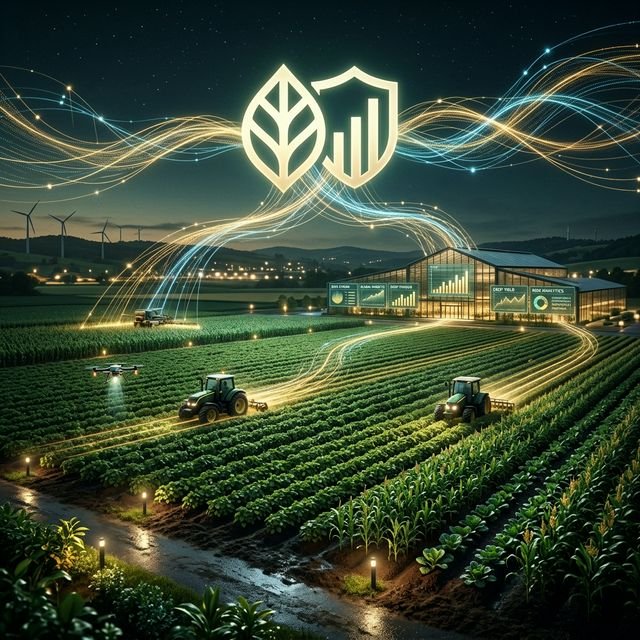
The integration of monitoring technologies and structured production records can significantly improve visibility. Sensors, environmental monitoring tools, and digital production logs allow operators and financial institutions to better understand how production systems perform over time.
When yield and production conditions become measurable, financial institutions gain a clearer basis for evaluating potential lending decisions.
Structuring Aggregation Networks
Another structural challenge is the fragmented nature of agricultural production.
Across many regions, production is distributed among large numbers of small producers operating independently. While this structure can support rural livelihoods, it creates operational complexity for financial institutions attempting to finance the sector.
Aggregation frameworks can address this issue by organizing producers into structured networks capable of consolidating supply, standardizing quality control, and maintaining centralized production records.
In such systems, financial institutions are able to interact with structured entities rather than thousands of individual operators. This significantly improves the efficiency of financing arrangements and risk assessment.
Strengthening Supply Chain Visibility
Global agricultural markets increasingly require transparency across supply chains. Buyers expect clear information regarding origin, handling conditions, and compliance with quality standards.
Traceability frameworks, monitoring systems, and digital record-keeping platforms can provide this visibility.
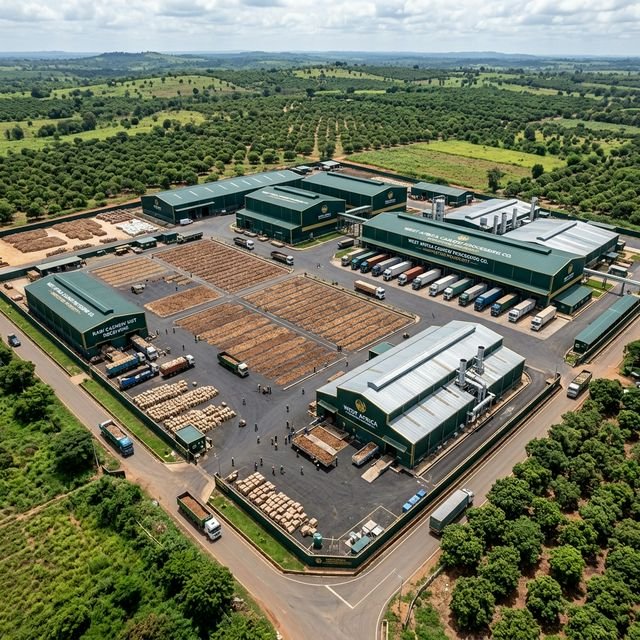
From a financial perspective, supply chain transparency also enables lenders to better understand how commodities move from production environments through storage, logistics, and export channels. This level of visibility helps reduce operational uncertainty.
Aligning Financing Structures with Agricultural Cycles
Agricultural production follows biological cycles that differ from traditional commercial lending schedules.
Standard financial structures often assume predictable monthly revenue flows. In agriculture, however, revenues are frequently tied to seasonal harvest periods.
Financing structures that account for these production cycles—such as harvest-linked repayment schedules or commodity-backed lending arrangements—can improve alignment between financial expectations and operational realities.
When financing models reflect the rhythms of agricultural production, repayment performance becomes more predictable.
Moving Toward Private Capital Participation
Government-led financing initiatives have historically played an important role in supporting agricultural sectors. However, long-term transformation of the industry requires sustained participation from private capital.
Commercial banks, institutional investors, and private investment vehicles have the capacity to significantly expand the scale of agricultural development. Their participation, however, depends on the presence of systems that allow them to evaluate and manage risk effectively.
When agricultural ecosystems evolve toward greater transparency, structured aggregation, and measurable production performance, the sector becomes far more attractive to private investment.
From Informal Production to Structured Industry
The long-term opportunity lies in transitioning agriculture from fragmented production environments into structured economic systems.
When production is measurable, supply chains are visible, and operational frameworks are organized, agriculture becomes a sector that financial institutions can confidently finance.
At that point, the sector begins to move beyond reliance on subsidy-driven support and toward a model where private capital drives growth and innovation.
The challenge therefore is not simply increasing agricultural funding. The challenge is building the systems that make agriculture financeable at scale.
Executive Summary
Making Agriculture Financeable: Moving From Uncertainty to Measurable Systems
A recurring challenge within Nigeria’s agricultural sector is the limited participation of commercial financial institutions. The issue is often framed as a lack of willingness, but in reality, the constraint is structural.
Ready to deploy resilient frameworks?
Engage our senior implementation team to translate diagnostic insights into highly functional operational architectures.