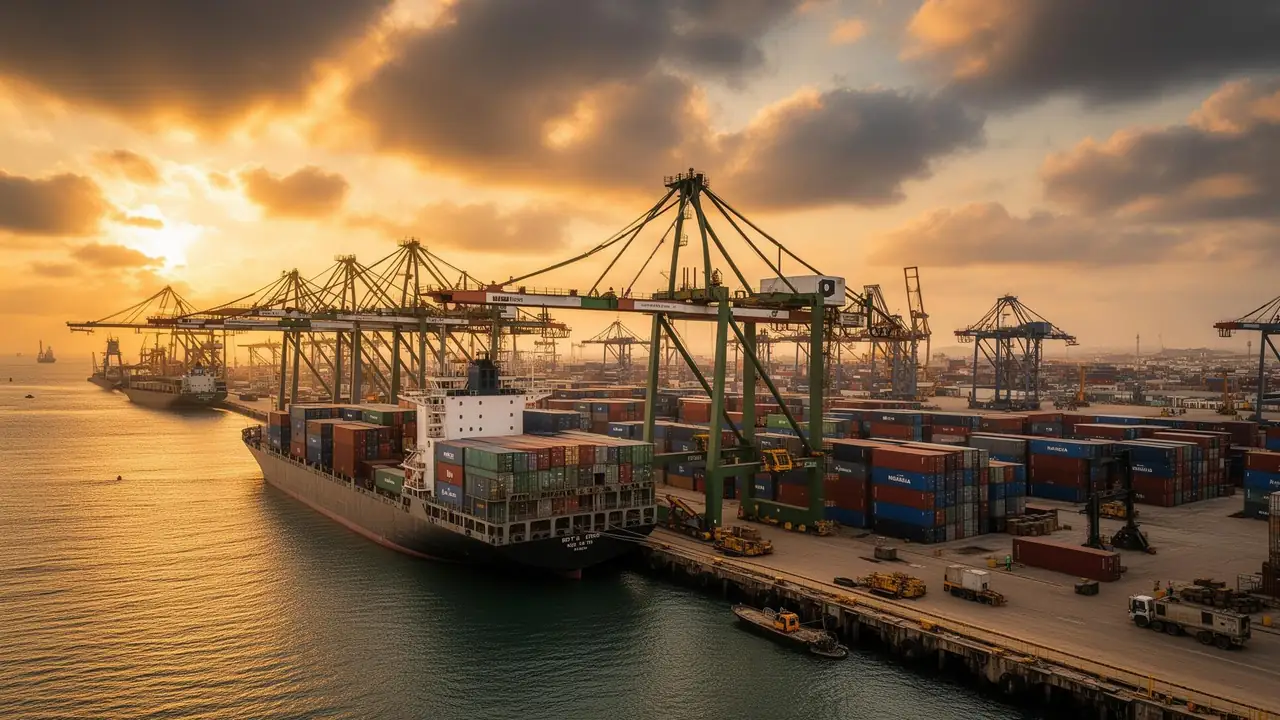
Moving one container by road from Lagos to Kano or Kaduna cost more than ₦1.2 million in 2023. By rail, the same journey cost about ₦200,000. Those figures come from the Nigerian Shippers' Council, as reported by BusinessDay on 26 April 2023, and they describe a six-to-one difference on a single route.
A gap that wide is the reason inland dry ports exist. It is also the reason their results depend so heavily on whether the rail link is running.
What is an inland dry port meant to do?
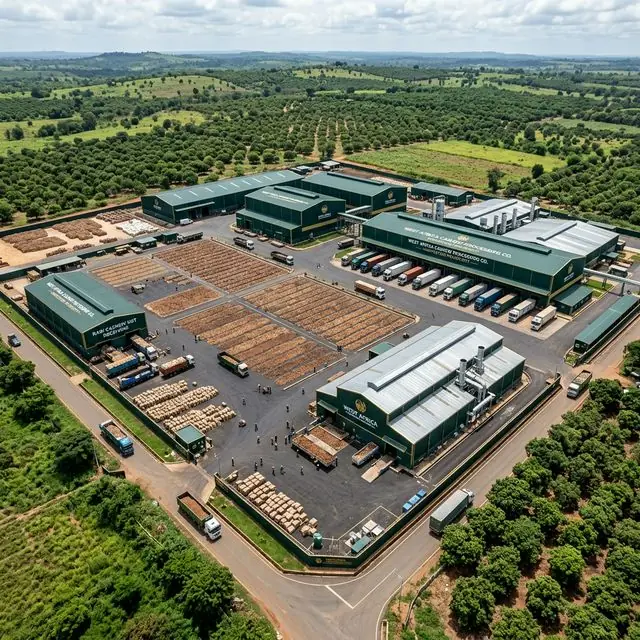
A dry port moves the point of clearance away from the seaport and closer to the producer or the factory. Containers travel inland under customs control, and the inspection, documentation and release happen at the inland site. The Kaduna Inland Dry Port was approved by the federal government in 2014 to ease congestion and cargo losses at the Lagos ports, and it was meant to serve northern agricultural and manufacturing cargo (Estate Intel).
For an exporter in the north, the promise is practical. Cargo is consolidated and cleared near the farm or the plant, and a sealed container makes the long journey south. The exporter deals with one bonded site, not with the queues at Apapa.
Why did the dry port struggle?
News Central reported in February 2025 that the Kaduna dry port opened in 2018 as an export hub, mainly for agricultural products, but had struggled to run at full capacity. Rail operations between Apapa and the dry port were suspended in September 2020 for track rehabilitation and resumed in October 2021, a gap of 13 months.
The throughput figures show the effect. In the first quarter of 2023, the port handled 920 TEUs, according to the Shippers' Council's north-west zonal report. The Council attributed the low volume to the ineffective operation of the rail lines. This is the most recent throughput figure we could source, and it should be read as a 2023 position, not a current one.
In the same report, the Nigerian Railway Corporation's managing director said it was aiming to improve freight movement from Lagos to Kaduna by the start of the second quarter of 2025, with a target of 70% operational efficiency. The managing director of Inland Containers Nigeria Limited expected productivity to rise by about 70% within a few quarters. We have not verified whether either target was met.
What does a corridor need before a dry port pays?
Three conditions follow from the record, and the third is the least discussed.
The first is a link that runs on a schedule. A shipper cannot plan an export programme around a connection that was out of service for 13 months. Reliability matters more to a buyer's delivery date than a lower freight rate.
The second is clearance at the inland site. If the agencies that must inspect or release a container are present only at the seaport, the cargo has gained nothing from travelling inland first. The time and cost simply move.
The third is cargo in both directions. Containers that carry imports north need to come back south loaded with exports, because an empty return leg doubles the cost of every trip. We read this as the main commercial test of a corridor. A dry port in a region with strong agricultural exports has the cargo for the southbound leg, but only if it is aggregated and ready when the wagons arrive.
What should be measured?
Corridor projects are often announced by their capacity. Kano's Dala Inland Port, for example, was planned in 2021 as a US$27 million facility handling about 30,000 TEUs, according to BusinessDay. Capacity says little about use.
The numbers that decide whether a corridor works are different: containers moved each month, the share carried by rail, the days a container waits at the inland site, and the delivered cost per container from the farm gate to the ship. A corridor that reports these figures can be managed, and one that reports only its design capacity cannot.
Executive Summary
Moving the Border Inland: What Kaduna's Dry Port Shows About Cargo Corridors
An inland port only works if the link to the seaport does. Kaduna's record, from a 13-month rail suspension to a six-to-one gap between road and rail costs, shows what corridor projects have to get right.
Ready to deploy resilient frameworks?
Engage our senior implementation team to translate diagnostic insights into highly functional operational architectures.